
Best Vitamin C Serum Comparison: L-Ascorbic Acid vs. THD Ascorbate vs. Derivatives (2026)
Quick Verdict: For maximum collagen synthesis and photoprotection without paying $182 for SkinCeuticals C E Ferulic, Timeless 20% Vitamin C + E Ferulic ($19.56) wins on both active synergy and airless pump stability; for beginners or dry barriers, CeraVe 10% Pure Vitamin C + Ceramides ($19.29) is the top gentle pure L-Ascorbic formula; and for luxury lipid-soluble brightening with zero acid sting, Sunday Riley C.E.O. 15% THD Ascorbate ($85.00) leads the non-acidic class.
Not all "Vitamin C serums" contain the same molecule—or even work through the same pathway. A 20% pure L-Ascorbic Acid serum formulated at pH 2.4 behaves completely differently on your skin barrier than a 15% lipid-soluble THD Ascorbate cream-serum at pH 5.5 or a 12% water-soluble glucoside derivative. We compared the top Vitamin C serums side by side across molecular form, pH, oxidation resistance, absorption time, and live 5-store price per ounce.
Vitamin C Serum Comparison at a Glance
Prices checked Nov 25, 2026| Metric | Timeless 20% C+E+Ferulic | SkinCeuticals C E Ferulic | CeraVe 10% Vitamin C | Naturium Vit C Complex | Sunday Riley C.E.O. 15% | The Ordinary 12% Glucoside |
|---|---|---|---|---|---|---|
| Vitamin C Type | 20% Pure L-Ascorbic Acid + Vit E + Ferulic | 15% Pure L-Ascorbic Acid + Vit E + Ferulic | 10% Pure L-Ascorbic Acid + 3 Ceramides | Gold-Encapsulated L-AA + Sodium Ascorbyl Phosphate | 15% THD Ascorbate (Oil-Soluble Ester) | 12% Ascorbyl Glucoside (Water-Soluble) |
| Price ($ / 1.0 oz) | $ ($19.56) | $$$$ ($182.00) | $ ($19.29) | $ ($20.99) | $$$ ($85.00) | $ ($14.90) |
| Formula pH | pH ~2.4–3.0 (High Penetration) | pH ~2.5–3.0 (Duke Patent Benchmark) | pH ~3.2–3.5 (Ceramide-Buffered) | pH ~4.0–4.5 (Low-Irritation) | pH ~5.0–5.5 (Non-Acidic Lipid) | pH ~6.0–7.0 (Neutral Gentle) |
| Packaging Shield | Opaque Airless Pump (Best Stability) | Amber Glass Dropper (Air Exposure) | Opaque Aluminum Barrier Tube | Opaque Airless Pump | Opaque Airless Pump | UV-Coated Amber Dropper |
| Time Required | 45 sec absorb before SPF | 60 sec absorb before SPF | 60 sec absorb before SPF | 45 sec absorb before SPF | 90 sec absorb (Rich Cream) | 30 sec absorb (Water-Gel) |
| Best For | Dark Spots, Collagen & Best Overall Value | Luxury Clinical Purists | Beginners & Dry/Sensitive Barriers | Combination & Acne-Prone Skin | Dry, Mature & Acid-Reactive Skin | Oily, Rosacea-Prone & Under-$15 |
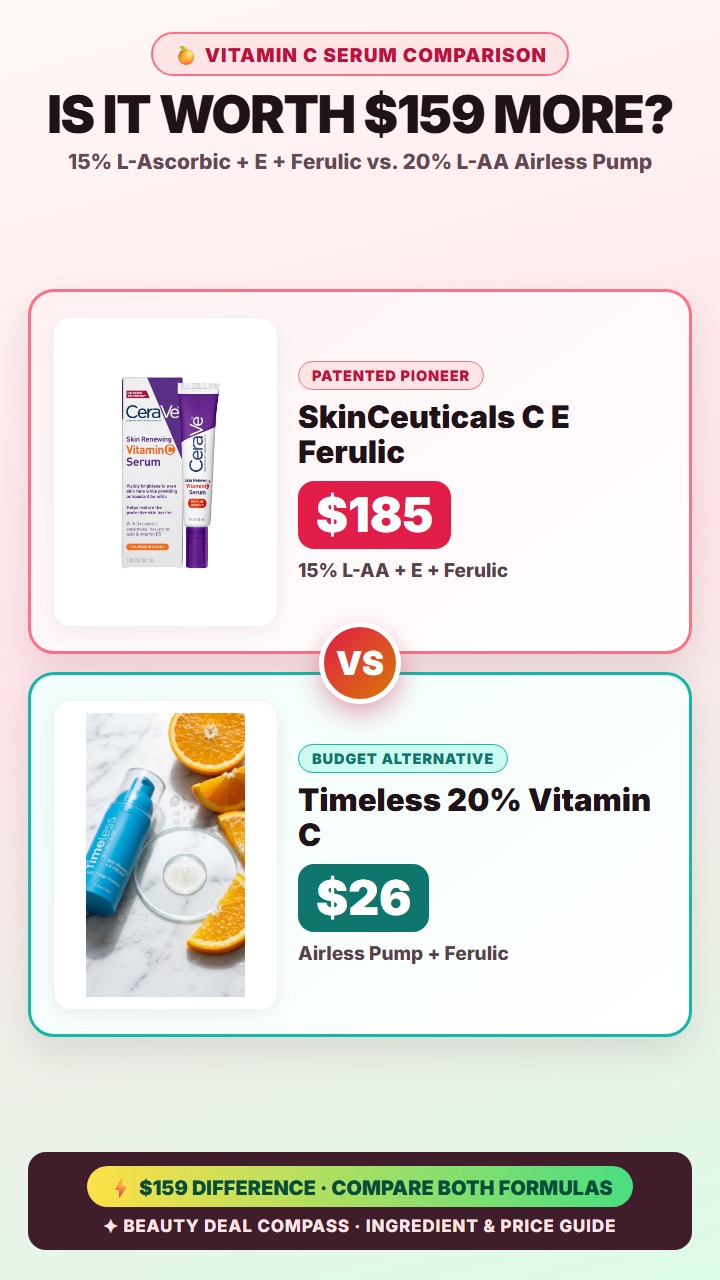
IS IT WORTH $159 MORE?: SkinCeuticals C E Ferulic ($182) vs. Timeless 20% Vitamin C ($19.56)
15% L-Ascorbic + E + Ferulic Dropper vs. 20% L-AA Airless Pump — watch our 60-second cosmetic chemistry and price-per-ounce audit.
1. The 3 Vitamin C Molecules Explained: Why Label Percentages Can Mislead You
One of the biggest traps in skincare shopping is seeing "20% Vitamin C" on two different bottles and assuming they deliver the same potency. In cosmetic chemistry, Vitamin C serums fall into three distinct molecular classes, each with different conversion requirements, pH levels, and barrier tolerance:
Pure L-Ascorbic Acid (10%–20%)
Found in: Timeless 20%, SkinCeuticals 15%, CeraVe 10%.
The only bioavailable form that binds immediately without enzymatic conversion. Requires an acidic pH below 3.5 to cross the stratum corneum and air-tight packaging to prevent oxidation.
THD Ascorbate (15%)
Found in: Sunday Riley C.E.O. 15%.
Tetrahexyldecyl Ascorbate attaches four fatty acid chains to Vitamin C so it dissolves through skin lipids at a gentle, non-stinging pH (~5.5) and resists oxidation for 12+ months.
SAP & Ascorbyl Glucoside (10%–12%)
Found in: Naturium Complex, The Ordinary 12%.
Buffered with a glucose sugar or phosphate salt so they stay stable in water at pH 4.5–7.0. Skin enzymes gradually cleave them into ascorbic acid with virtually zero redness.
2. The "C + E + Ferulic" Synergy Rule & Why Packaging Beats Brand Price
Landmark photoprotection research conducted at Duke University demonstrated two critical rules for pure L-Ascorbic Acid serums:
- The 8x Antioxidant Multiplier: Combining pure L-Ascorbic Acid (15%–20%) with 1% Alpha-Tocopherol (Vitamin E) and 0.5% Ferulic Acid doubles UV photoprotection from 4-fold to 8-fold because Ferulic Acid recycles oxidized Vitamin C and Vitamin E back into their active states.
- The Dropper Bottle Flaw: Every time you unscrew a traditional glass dropper bottle, fresh oxygen floods the headspace and accelerates L-Ascorbic Acid oxidation into dark amber dehydroascorbic acid. Switching to an opaque airless pump (like Timeless or Naturium) or a metal-lined collapsible barrier tube (like CeraVe) keeps oxygen out from first pump to final drop.
3. Detailed Vitamin C Serum Reviews & Live 5-Store Price Comparison
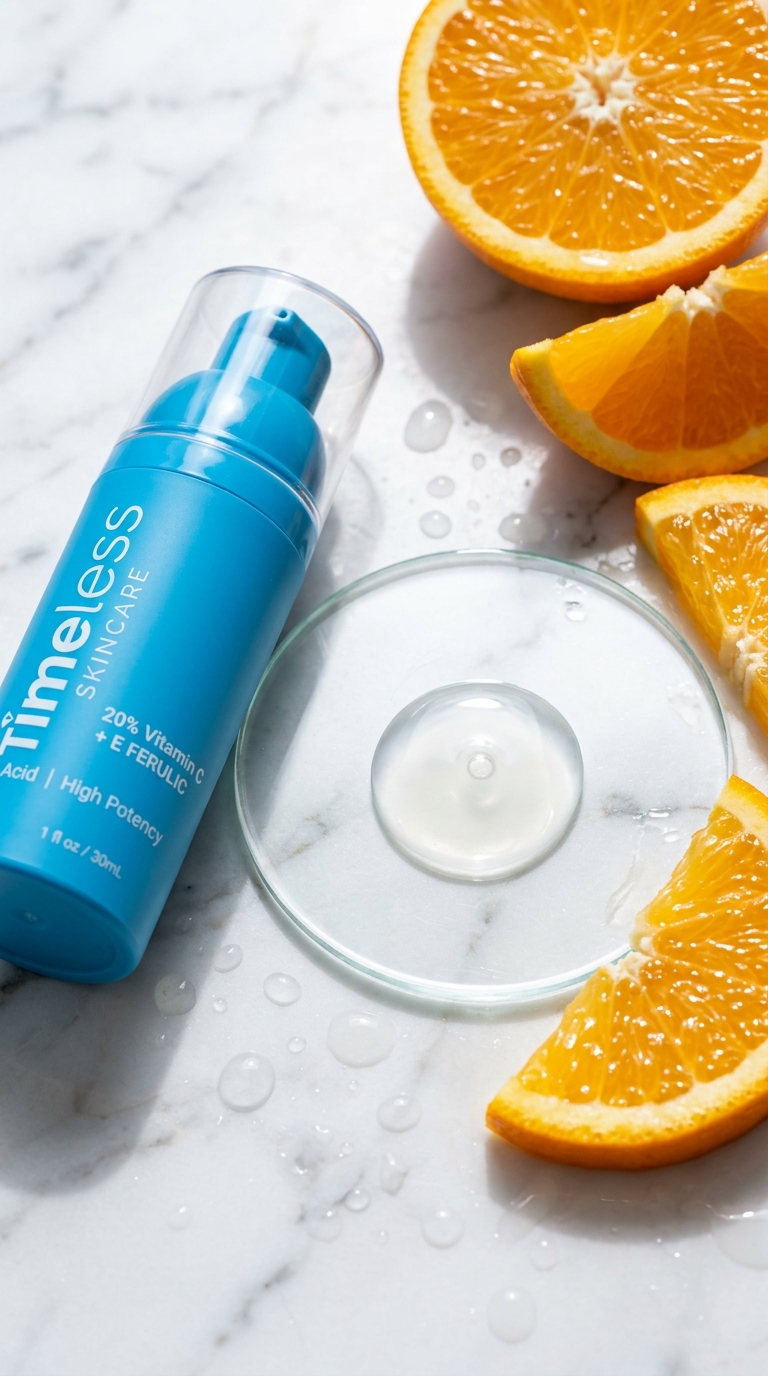
Timeless Skin Care 20% Vitamin C + E Ferulic Acid Serum (1.0 fl oz / 30 mL)
Timeless delivers the full water-plus-lipid antioxidant triad—20% pure L-Ascorbic Acid, Vitamin E, and Ferulic Acid at a true low acidic pH—for nearly 90% less than $182 luxury counter serums. Better yet, its opaque airless pump prevents the daily oxygen exposure that plagues glass dropper bottles, keeping the serum clear and potent significantly longer.
What We Like
- Full synergistic triad: 20% L-Ascorbic Acid + Vitamin E + Ferulic Acid at low pH
- Opaque airless pump protects against oxygen and UV light degradation
- Water-light, fragrance-free texture absorbs in 45 seconds under sunscreen
Keep in Mind
- 20% pure L-Ascorbic Acid at pH ~2.4 is potent and can tingle on compromised or rosacea-prone skin (beginners should start with CeraVe 10%)
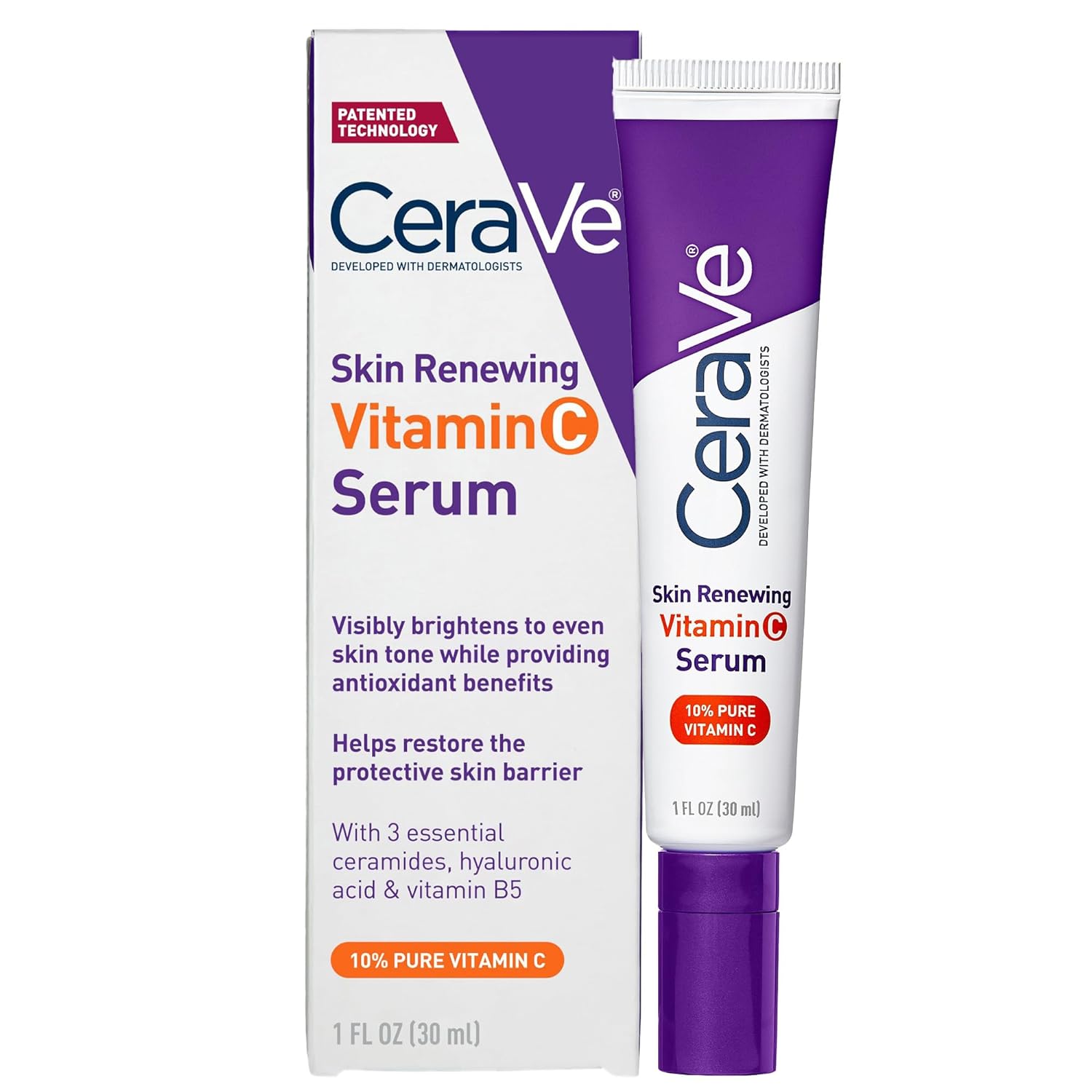
CeraVe Skin Renewing Vitamin C Serum (1.0 fl oz / 30 mL)
Clinical dermatology literature shows that 10% pure L-Ascorbic Acid hits the threshold for collagen support and antioxidant protection while cutting irritation risk in half compared to 20% solutions. CeraVe suspends its 10% L-Ascorbic Acid inside a soothing gel-lotion enriched with three barrier ceramides and panthenol, sealed in a collapsible aluminum tube that blocks light and air.
What We Like
- 10% pure L-Ascorbic Acid is the dermatologist sweet spot for daily barrier comfort
- 3 essential ceramides + Vitamin B5 prevent the dry tightness common with acidic serums
- Collapsible metal-lined tube prevents light and air oxidation
Keep in Mind
- Soft gel-lotion consistency feels slightly richer than watery dropper serums on very oily skin
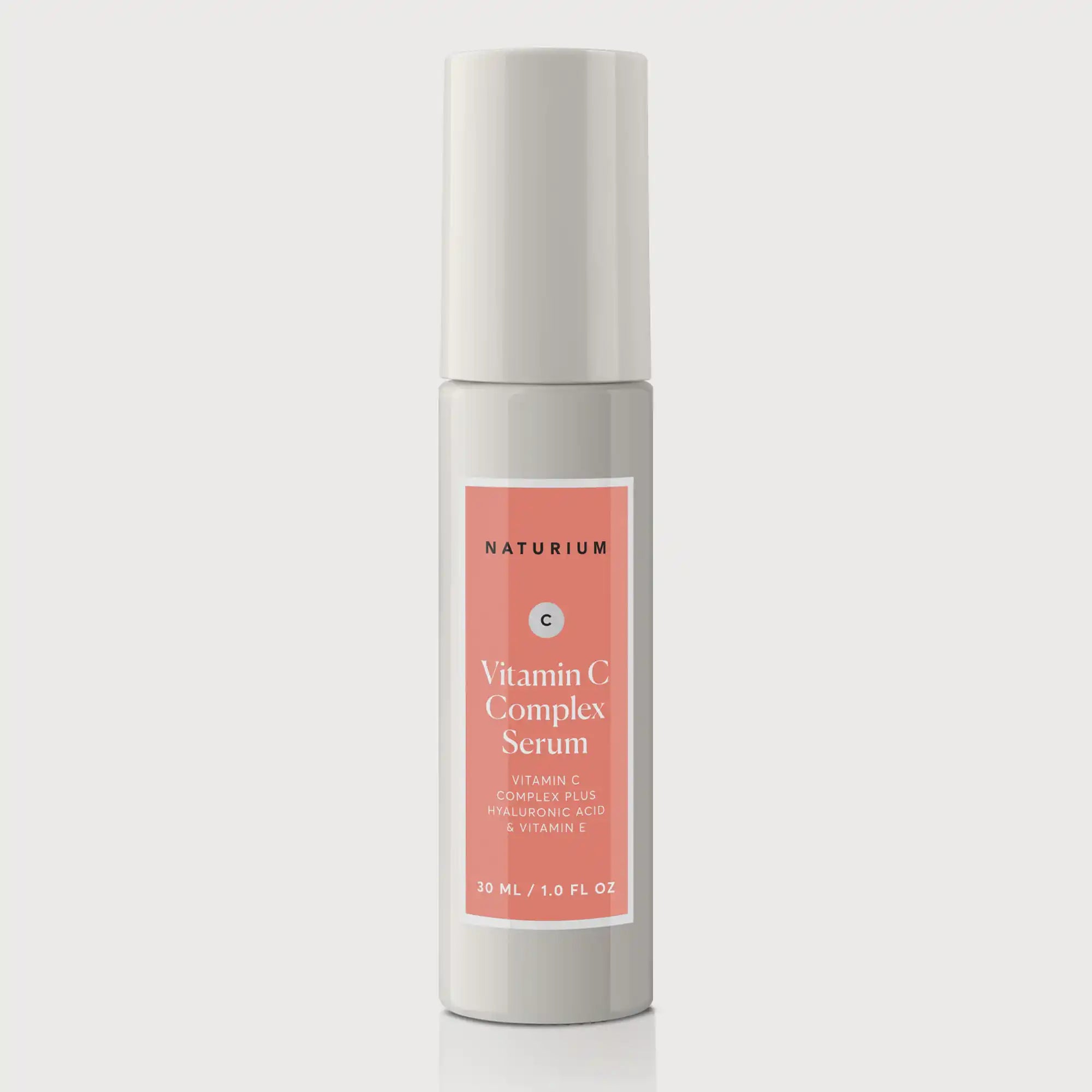
Naturium Vitamin C Complex Serum (1.0 fl oz / 30 mL)
Why choose Naturium over single-molecule serums? First, it binds pure L-Ascorbic Acid to sub-micron colloidal gold and glutathione to prevent premature oxidation without needing a burning-low pH. Second, it pairs that encapsulated L-Ascorbic Acid with Sodium Ascorbyl Phosphate (SAP)—a water-soluble Vitamin C salt clinically studied for reducing sebum oxidation in breakout-prone skin.
What We Like
- Combines immediate L-Ascorbic Acid with breakout-friendly Sodium Ascorbyl Phosphate
- Glutathione co-antioxidant recycles Vitamin C and resists yellowing
- Silky, non-greasy hyaluronic gel base layers seamlessly under water-based sunscreens
Keep in Mind
- Moderated pH (~4.0–4.5) is gentler than pH 2.4 formulas, so stubborn sunspots fade more gradually than with 20% pure L-Ascorbic Acid
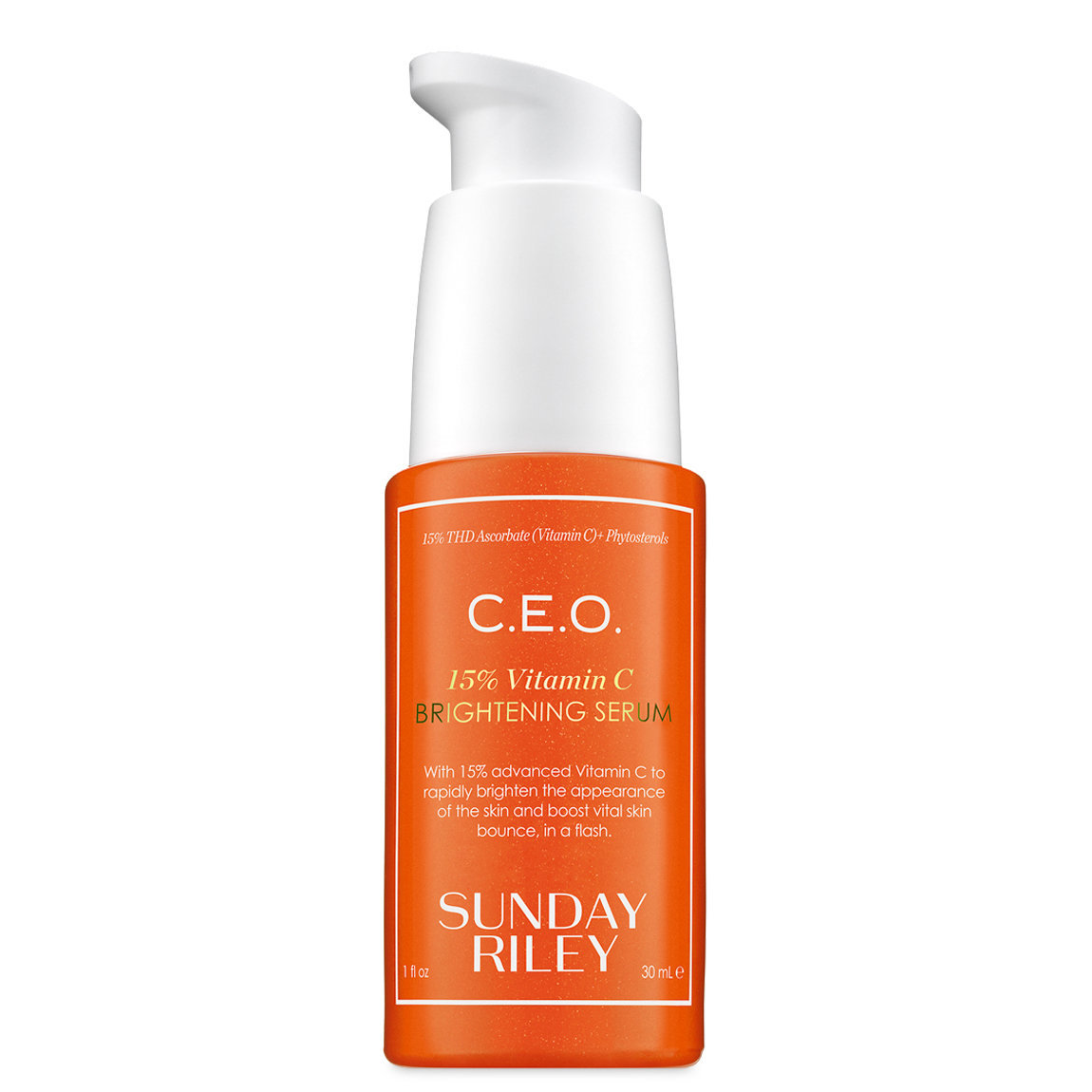
Sunday Riley C.E.O. 15% Vitamin C Brightening Serum (1.0 fl oz / 30 mL)
If every water-based L-Ascorbic Acid serum leaves your face stinging, red, or tight, Sunday Riley C.E.O. solves the problem by switching to 15% THD Ascorbate—an oil-soluble Vitamin C ester that merges effortlessly with your skin's natural lipid bilayers at a comfortable pH (~5.5). Its rich emulsion doubles as a morning moisturizer for dry and mature complexions.
What We Like
- 15% lipid-soluble THD Ascorbate penetrates skin lipids smoothly without low-pH stinging
- Highly stable against oxygen and heat—does not oxidize brown like L-Ascorbic droppers
- Plumping cream-serum texture delivers immediate dewy radiance on dry and mature skin
Keep in Mind
- Prestige $85/oz price tag (watch for Ulta/Amazon 15%–30% off beauty events)
- Contains citrus peel oils for scent, so ultra-fragrance-reactive skin should patch test
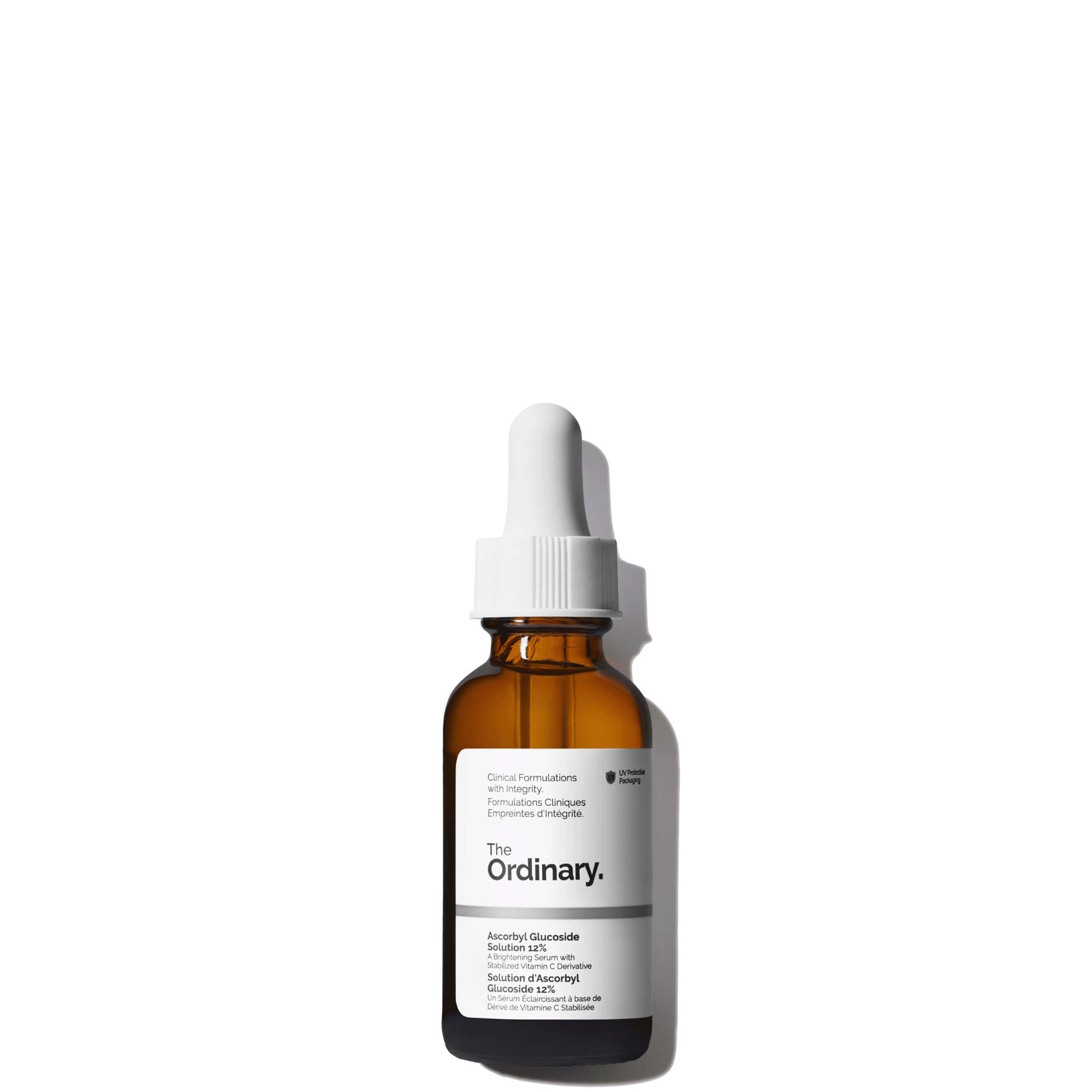
The Ordinary Ascorbyl Glucoside Solution 12% (1.0 fl oz / 30 mL)
For oily, redness-prone, or teen/starter routines that want daily antioxidant support under $15 with zero oil, zero silicones, and zero acid sting, The Ordinary's 12% Ascorbyl Glucoside is the cleanest entry point. Once absorbed, alpha-glucosidase enzymes in the epidermis gradually release active Vitamin C throughout the morning.
What We Like
- Neutral pH (6.0–7.0) causes virtually zero stinging, flushing, or barrier disruption
- 100% oil-free, silicone-free water-gel absorbs in 30 seconds without pilling under makeup
- Under $15 at both Sephora and Ulta Beauty
Keep in Mind
- Requires enzymatic conversion in the skin, so dark-spot fading is milder than 10%–20% pure L-Ascorbic Acid
Olehenriksen Banana Bright+ Eye Crème with Vitamin C (0.5 fl oz / 15 mL)
Never apply a pH 2.4 facial L-Ascorbic Acid serum directly onto thin eyelid or tear-trough skin. Olehenriksen combines three stabilized forms of Vitamin C—gold-complexed L-Ascorbic Acid, THD Ascorbate, and 3-O-Ethyl Ascorbic Acid—with subtle light-reflecting banana powder minerals that neutralize blue-purple under-eye shadows and grip concealer without creasing.
What We Like
- Triple Vitamin C blend formulated specifically for delicate orbital skin
- Fragrance-free updated "+" formula with instant color-correcting luminosity under concealer
Keep in Mind
- 0.5 fl oz eye jar is a targeted orbital treatment rather than a full-face serum
4. How to Layer Vitamin C Serum Without Pilling or Irritation (AM vs. PM Protocol)
✅ Always Pair With: Morning SPF 30+
Apply 3–4 drops of Vitamin C to clean, dry morning skin, wait 45 to 60 seconds for the pH to equilibrate, then apply moisturizer and broad-spectrum SPF 30+. Vitamin C neutralizes the free radicals generated by UV rays that get past sunscreen filters.
✅ Safe to Layer With: Niacinamide & Hyaluronic Acid
Apply low-pH L-Ascorbic Acid first on clean skin, wait 60 seconds, and follow with Hyaluronic Acid or Niacinamide. Together, Vitamin C blocks tyrosinase pigment production while Niacinamide blocks melanosome transfer.
❌ Separate By Time of Day: Retinol, AHA/BHA & Benzoyl Peroxide
Never layer Benzoyl Peroxide directly over pure L-Ascorbic Acid (it oxidizes Vitamin C on contact). Keep Vitamin C in your morning routine and save Retinol, Glycolic Acid, or Salicylic Acid for nighttime.
Frequently Asked Questions About Vitamin C Serums
What is the difference between L-Ascorbic Acid and THD Ascorbate in Vitamin C serums?
L-Ascorbic Acid (used in SkinCeuticals, Timeless 20%, and CeraVe 10%) is the pure, biologically active water-soluble form of Vitamin C that works immediately on contact without requiring enzymatic conversion, but it requires an acidic pH below 3.5 and air-tight packaging. THD Ascorbate (Tetrahexyldecyl Ascorbate, used at 15% in Sunday Riley C.E.O.) is a lipid-soluble ester that penetrates skin lipids smoothly at a neutral pH (~5.5) with far higher shelf stability and less stinging for dry or reactive skin.
How does Timeless 20% Vitamin C + E Ferulic compare to SkinCeuticals C E Ferulic?
Both formulas pair pure L-Ascorbic Acid at an acidic pH (<3.0) with Alpha-Tocopherol (Vitamin E) and Ferulic Acid—the synergistic antioxidant triad shown to double UV photoprotection and stabilize L-Ascorbic Acid. While SkinCeuticals C E Ferulic ($182) uses 15% L-Ascorbic Acid in an amber glass dropper bottle, Timeless ($19.56) uses 20% L-Ascorbic Acid inside an opaque airless pump that prevents oxygen exposure every time you dispense it, saving over $155 per ounce.
How can you tell if a Vitamin C serum has oxidized and gone bad?
Fresh L-Ascorbic Acid serums should be crystal clear to very pale champagne straw. Once L-Ascorbic Acid oxidizes into dehydroascorbic acid from air, heat, or light exposure, it turns dark orange or amber brown. An oxidized Vitamin C serum loses its antioxidant efficacy and can cause temporary yellowish staining on the skin surface—discard it once it turns dark amber.
Should Vitamin C serum be applied in the morning or at night?
Dermatologists recommend applying Vitamin C serum in the morning on clean skin, waiting 45 to 60 seconds for absorption, and layering broad-spectrum SPF 30+ on top. Vitamin C acts as a secondary free-radical safety net that neutralizes UV- and pollution-induced reactive oxygen species (ROS) that slip past sunscreen filters.
Related Skincare Science & Dupe Guides
- Best Vitamin C Serums Under $50 (Full Budget & Vitamin C-Free Dark Spot Roundup)
- Caudalie Vinoperfect ($82) vs. Murad Rapid Dark Spot ($88) vs. $12 Good Molecules Discoloration Serum
- Dermatologist Skincare Layering Order (AM vs. PM) & Active Ingredient Mixing Chart
- The 5% vs. 10% Niacinamide Rule: Why High Percentages Cause Irritation